SodaSlim Official Website › Metabolism Supplement Guide
Metabolism Supplement GuideThe Metabolism Supplement Guide: What The Category Actually Supports
Metabolism and appetite supplements are a large category with small results. A 2021 review screened more than twenty thousand citations to find 315 randomised trials, judged 52 of them well enough conducted to draw a conclusion from, and found 16 showing a significant difference between groups, ranging from 0.3 kg to 4.93 kg. That is the honest envelope, and almost every trial ran alongside a diet.
Written by a desk that sells one of these products, which is why it leads with the number that suits it least.
The four mechanisms nearly every label in this category claims
Different bottles, different botanicals, and underneath them the same four stories told in different orders.
Thermogenesis: burning more at rest
Almost always caffeine, sometimes with green tea catechins beside it. It is the best-evidenced mechanism in the category and also the smallest: the classic respirometer study measured 150 extra kilocalories a day in lean volunteers taking 100 mg every two hours, and 79 in post-obese ones.
Fat oxidation: changing the fuel mix
Usually green tea. The EGCG meta-analysis found a moderate rise in energy expenditure and a fall in respiratory quotient at around 300 mg. Worth knowing that a change in fuel mix is not a change in fat mass if energy balance is unchanged.
Appetite and satiety
Garcinia, fibre, chromium, and a long tail of others. The best-known test of garcinia, a twelve-week JAMA trial at 1,500 mg of hydroxycitric acid a day, found no difference from placebo in weight or fat mass.
Carbohydrate and glucose handling
Chlorogenic acid from green coffee, berberine, cinnamon. An eight-week trial at 400 mg twice daily reported lower fasting glucose and insulin resistance; the meta-analysis of the weight literature found every included trial at high risk of bias.
A label that claims all four at once is not lying. It is describing four small effects, each measured separately, in a capsule whose amounts may or may not reach the doses those measurements used. Whether it reaches them is the question a Supplement Facts panel answers and a front label does not.
Three structural reasons the results are smaller than the marketing
The trials run alongside diets
Almost every study cited in this category randomised people who were also eating to a plan, sometimes a supervised one. The supplement was the variable, not the intervention, and a result of half a kilogram against placebo describes what the capsule added to an effort already under way.
The doses in trials are often higher than the doses in bottles
A capsule that names an ingredient is not a capsule that contains the amount that ingredient was tested at. Where a label prints no panel at all, the question cannot even be asked, and a large fraction of this category prints a proprietary blend instead of amounts.
Publication and funding shape what gets read
Several of the positive results in this field come from manufacturer-funded trials in single populations. The chlorogenic acid blood-pressure meta-analysis says so in its own conclusion. And the most famous green coffee trial of all, Vinson 2012, was retracted two years after publication.
None of that means the category is worthless. It means the realistic claim for a good product in it is a small assist to something already working, which is exactly the wording a US supplement label is required to use: supports, helps, promotes.
The five ingredients you will meet most often
| Ingredient | What it is sold for | The amount its trials used | The honest verdict |
|---|---|---|---|
| Caffeine | Energy expenditure, appetite | 100 mg repeated, up to 400 mg a day as the adult ceiling | Real, small, and the one with a safety number attached |
| Green tea extract | Fat oxidation | 300 mg of EGCG to move metabolic rate; 338 mg a day reviewed ceiling for a solid dose | 0.04 kg in non-Japanese trials |
| Green coffee extract | Glucose handling, weight | 500 to 800 mg a day over 8 to 12 weeks | Mixed, mostly manufacturer-funded, one retracted flagship |
| Garcinia cambogia | Appetite, fat synthesis | 1,500 mg of hydroxycitric acid a day | 0.88 kg pooled, and a liver injury case series |
| Raspberry ketone | Fat breakdown | No single-ingredient human trial exists | Reliable human research is lacking, in the words of its own review |
Amounts are from the trials named in the sources below, not from any particular product. No bottle is being described here.
Read that table's third column as the thing to look for on a panel. If a label prints an amount, you can compare it. If it prints a proprietary blend, or no panel at all, the comparison is impossible and you are buying on trust.
Safety, which gets less attention than it deserves
Two things in this category have documented harm attached, and neither is usually on the front of a bottle.
The first is adulteration. The FDA maintains a public list of tainted weight-loss products found to contain undeclared pharmaceutical ingredients, including drugs withdrawn from the market. It is a category-level problem rather than a statement about any particular brand, and it is the strongest argument for buying from a traceable channel.
The second is the liver. The Drug-Induced Liver Injury Network published a case series of garcinia cambogia products, alone and with green tea, causing moderate to severe liver injury: 91 per cent hospitalised, one transplant, one death. A systematic review of green tea identified the liver as the target organ for concentrated catechin doses and set a safe intake level of 338 mg of EGCG a day for a solid dose.
And at the level of the whole category, the CDC's surveillance work estimated 23,005 US emergency-department visits a year attributable to dietary supplements, with weight-loss products the largest single group among single-supplement cases.
New abdominal pain, unusual tiredness, dark urine, pale stools or any yellowing of the eyes or skin: stop, and get seen. And anything that makes you aware of your own heartbeat at rest: stop, and get seen. Both are rare. Both are much easier to act on if somebody has told you in advance.
What actually works, said once
It would be dishonest to write ten sections about supplements and not say this plainly.
The interventions with large, consistent evidence behind them in this area are not supplements. They are changes to what is in the house, to how much protein and fibre a day contains, to sleep, and to how much you move. None of those is sold in a bottle, none of them is quick, and all of them are free.
A supplement's realistic role is at the margin of that effort: a small assist, worth having if it is cheap, safe and easy to take, and worth nothing at all if it becomes a reason to postpone the rest. NCCIH and the NIH Office of Dietary Supplements both say a version of this, and they have nothing to sell.
This desk sells a capsule in this category. Writing the paragraph above is not humility, it is the condition on which anything else here can be believed. The next guide, choosing a metabolism supplement, assumes you have decided to buy one anyway and sets out how to read the label.
Sources behind this guide
- Batsis JA, Apolzan JW, Bagley PJ, et al. A systematic review of dietary supplements and alternative therapies for weight loss. Obesity (Silver Spring). 2021;29(7):1102-1113. PMID 34159755. https://pubmed.ncbi.nlm.nih.gov/34159755/
- Geller AI, Shehab N, Weidle NJ, et al. Emergency department visits for adverse events related to dietary supplements. N Engl J Med. 2015;373(16):1531-40. PMID 26465986. https://pubmed.ncbi.nlm.nih.gov/26465986/
- Dulloo AG, Geissler CA, Horton T, Collins A, Miller DS. Normal caffeine consumption: influence on thermogenesis and daily energy expenditure in lean and postobese human volunteers. Am J Clin Nutr. 1989;49(1):44-50. PMID 2912010. https://pubmed.ncbi.nlm.nih.gov/2912010/
- Nawrot P, Jordan S, Eastwood J, Rotstein J, Hugenholtz A, Feeley M. Effects of caffeine on human health. Food Addit Contam. 2003;20(1):1-30. PMID 12519715. https://pubmed.ncbi.nlm.nih.gov/12519715/
- Kapoor MP, Sugita M, Fukuzawa Y, Okubo T. Physiological effects of epigallocatechin-3-gallate (EGCG) on energy expenditure for prospective fat oxidation in humans: a systematic review and meta-analysis. J Nutr Biochem. 2017;43:1-10. PMID 27883924. https://pubmed.ncbi.nlm.nih.gov/27883924/
- Jurgens TM, Whelan AM, Killian L, Doucette S, Kirk S, Foy E. Green tea for weight loss and weight maintenance in overweight or obese adults. Cochrane Database Syst Rev. 2012;12(12):CD008650. PMID 23235664. https://pubmed.ncbi.nlm.nih.gov/23235664/
- Hu J, Webster D, Cao J, Shao A. The safety of green tea and green tea extract consumption in adults - results of a systematic review. Regul Toxicol Pharmacol. 2018;95:412-433. PMID 29580974. https://pubmed.ncbi.nlm.nih.gov/29580974/
- Onakpoya I, Terry R, Ernst E. The use of green coffee extract as a weight loss supplement: a systematic review and meta-analysis of randomised clinical trials. Gastroenterol Res Pract. 2011;2011:382852. PMID 20871849. https://pubmed.ncbi.nlm.nih.gov/20871849/
- Vinson JA, Burnham BR, Nagendran MV. Randomized, double-blind, placebo-controlled, linear dose, crossover study to evaluate the efficacy and safety of a green coffee bean extract in overweight subjects. Diabetes Metab Syndr Obes. 2012;5:21-7. RETRACTED; retraction notice Diabetes Metab Syndr Obes. 2014;7:467. PMID 22291473. https://pubmed.ncbi.nlm.nih.gov/22291473/
- Roshan H, Nikpayam O, Sedaghat M, Sohrab G. Effects of green coffee extract supplementation on anthropometric indices, glycaemic control, blood pressure, lipid profile, insulin resistance and appetite in patients with the metabolic syndrome: a randomised clinical trial. Br J Nutr. 2018;119(3):250-258. PMID 29307310. https://pubmed.ncbi.nlm.nih.gov/29307310/
- Onakpoya IJ, Spencer EA, Thompson MJ, Heneghan CJ. The effect of chlorogenic acid on blood pressure: a systematic review and meta-analysis of randomized clinical trials. J Hum Hypertens. 2015;29(2):77-81. PMID 24943289. https://pubmed.ncbi.nlm.nih.gov/24943289/
- Heymsfield SB, Allison DB, Vasselli JR, Pietrobelli A, Greenfield D, Nunez C. Garcinia cambogia (hydroxycitric acid) as a potential antiobesity agent: a randomized controlled trial. JAMA. 1998;280(18):1596-600. PMID 9820262. https://pubmed.ncbi.nlm.nih.gov/9820262/
- Onakpoya I, Hung SK, Perry R, Wider B, Ernst E. The use of Garcinia extract (hydroxycitric acid) as a weight loss supplement: a systematic review and meta-analysis of randomised clinical trials. J Obes. 2011;2011:509038. PMID 21197150. https://pubmed.ncbi.nlm.nih.gov/21197150/
- Vuppalanchi R, Bonkovsky HL, Ahmad J, et al. Garcinia cambogia, either alone or in combination with green tea, causes moderate to severe liver injury. Clin Gastroenterol Hepatol. 2022;20(6):e1416-e1425. PMID 34400337. https://pubmed.ncbi.nlm.nih.gov/34400337/
- Rao S, Kurakula M, Mamidipalli N, Tiyyagura P, Patel B, Manne R. Pharmacological exploration of phenolic compound: raspberry ketone-update 2020. Plants (Basel). 2021;10(7):1323. PMID 34209554. https://pubmed.ncbi.nlm.nih.gov/34209554/
- Tainted Weight Loss Products. U.S. Food and Drug Administration, Medication Health Fraud. https://www.fda.gov/drugs/medication-health-fraud/tainted-weight-loss-products
- Dietary Supplements for Weight Loss: Fact Sheet for Consumers. Office of Dietary Supplements, National Institutes of Health. https://ods.od.nih.gov/factsheets/WeightLoss-Consumer/
- Weight Control and Complementary Health Approaches: What the Science Says. National Center for Complementary and Integrative Health, National Institutes of Health. https://www.nccih.nih.gov/health/weight-control
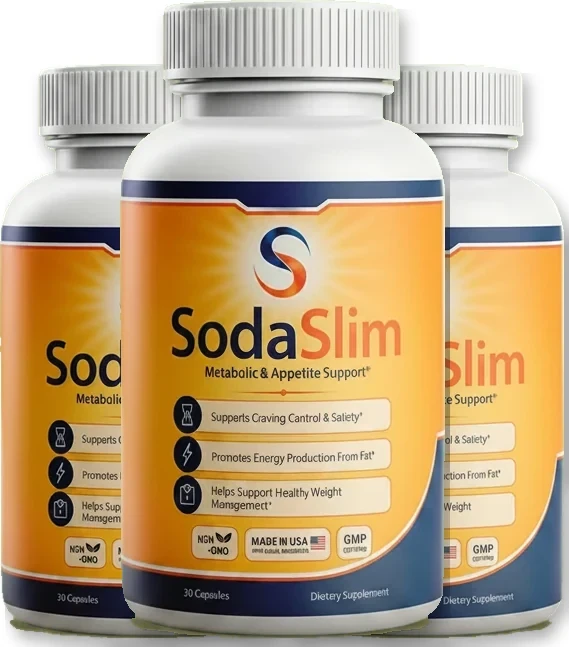
If you are buying one, SodaSlim is what this desk sells
Five named ingredients, one capsule a day, and sixty days from purchase. The ingredient pages print the trial amounts beside each name.
$158 for two bottles, $294 for six, and 60 days from the date you buy
Order SodaSlim On The Official WebsiteLot SOD-26/SO-5737 · 30 capsules · taken once each morning