SodaSlim Official Website › Blog › Timeline
Does SodaSlim Really Work? How Long a Metabolism Capsule Takes
Does SodaSlim work? SodaSlim is sold for metabolic and appetite support, and its label says support rather than promising a result. The caffeine acts within about an hour, while the other four ingredients were tested over eight to twelve weeks. Buyers writing to this desk most often report a change in weeks three to six, and the seller asks for at least 30 days of use before you decide.
Two clocks, not one
The commonest complaint about any metabolism capsule is that nothing happened in the first week. It is also the commonest complaint about this one, and it is worth separating into two questions that get blurred together.
The first question is when the ingredients start doing whatever they do. The second is when you could possibly tell. They have very different answers, and the gap between them is where most disappointment is manufactured.
A capsule containing a stimulant answers the first question in about an hour. It answers the second one in a month or two, if at all.
The fast clock: hours
Caffeine is the only ingredient in a formula like this that produces a sensation, and it does so quickly and measurably.
In a 1989 room-respirometer study, 100 mg raised resting metabolic rate by three to four per cent over 150 minutes. Repeated every two hours across a twelve-hour day it raised daytime energy expenditure by eight to eleven per cent, with no change to the following night, netting 150 extra kilocalories a day in lean volunteers and 79 in post-obese ones.
That is a real effect, it arrives on day one, and it is the thing people interpret as the capsule working. What it is not is an outcome. A few per cent on resting metabolic rate for a couple of hours is a rate change, and a rate change matched by an extra slice of bread is nothing at all.
The slow clock: weeks
Everything else in a formula like this runs on a timescale of weeks and produces no sensation at all.
Chlorogenic acid from green coffee is a carbohydrate-handling story. An eight-week trial at 400 mg twice daily in people with metabolic syndrome reported lower fasting glucose, lower insulin resistance and lower systolic blood pressure against placebo. A twelve-week trial at 500 mg a day reported changes in body composition measured by DXA.
Green tea catechins are a fuel-mix story. The EGCG meta-analysis finds energy expenditure moderately raised and respiratory quotient lowered at around 300 mg, and the Cochrane review finds a weight difference of 0.04 kg across six non-Japanese trials of twelve to thirteen weeks.
Neither of those will tell you it is working. Both were measured with instruments over months.
What each ingredient's trials actually ran for
| Ingredient | Trial length | What was measured | Could you feel it? |
|---|---|---|---|
| Caffeine | Hours to a day | Energy expenditure in a sealed chamber | Yes, the stimulant part |
| Green coffee extract | 8 to 12 weeks | Glucose, insulin resistance, blood pressure, body composition | No |
| Green tea extract | 12 to 13 weeks | Weight, BMI, respiratory quotient | No |
| Garcinia | 12 weeks | Weight and fat mass, in a trial that found no difference | No |
| Raspberry ketone | No human trial of the compound alone | Nothing | No |
Trial lengths are from the papers cited at the foot of this post.
Read the second column as the answer to the question in the title. Two of the five have no human timescale at all, one is measured in hours and produces sensation rather than outcome, and the two with real outcome data ran for two to three months.
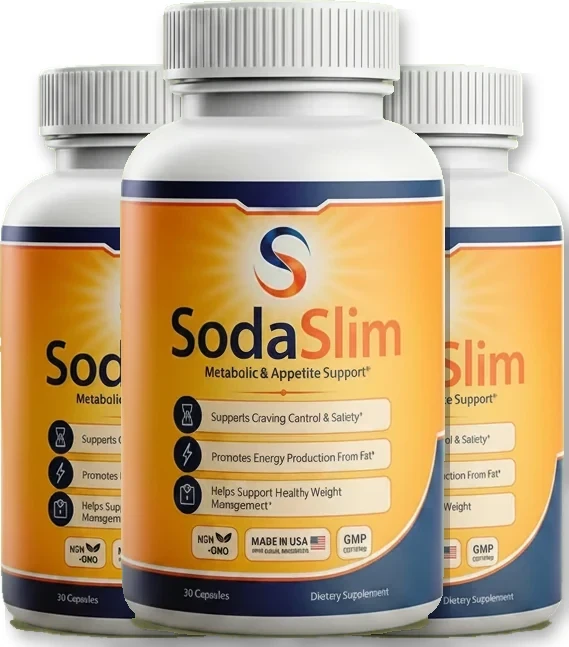
SodaSlim is a two-month question, and the window is sixty days
One capsule each morning, a decision at day thirty and a final one at day forty-five. The guarantee runs from the date of purchase.
$158 for two bottles, $294 for six, and 60 days from the date you buy
Order SodaSlim On The Official WebsiteLot SOD-26/SO-5737 · 30 capsules · taken once each morning
Why the thing you are measuring is noisy
Even if the capsule is doing something, the signal has to get through a lot of noise before you can see it.
- Weight moves by a kilogram or two within a single day on water, salt and what is in the gut. Weighing daily and comparing Tuesday with Monday measures the weekend.
- Appetite between meals varies with sleep. A short night reliably changes the next day's hunger, and that effect is larger than anything a capsule in this category has demonstrated.
- It varies with what is in the house. Which is not a constant across eight weeks for most people.
- And memory rewrites itself. A person who has paid $207 for something will remember week one as worse than it was, so that week four feels like progress.
Which is why a written note made before the first capsule is the single most useful thing in this whole process, and why it has to be written rather than remembered.
A method that produces an answer
- Write the purchase date on the bottle the day it arrives.
- Before the first capsule, write two lines: how often you eat between meals, and how the first half of a typical day feels.
- Change one thing. Starting a capsule and a new eating plan in the same week means you will never know which did what.
- Take it every day and mark the days. A bottle taken nineteen times out of thirty has not been tested.
- Weigh weekly at most, at the same time under the same conditions.
- At day 30, answer your two lines again in writing before you look at the originals.
- At day 45, decide, while there is still time to act on the decision.
A refund has to be authorised by phone, packed, posted and received. Day 45 leaves fifteen days for all four. Day 58 leaves two, and the post does not care.
Fitting all of this inside a guarantee
A sixty-day window is longer than most in this category and it is still slightly shorter than the trials.
Two of the five ingredients here have outcome data from twelve-week studies. A sixty-day decision is therefore a decision taken about a fortnight early by that standard, and it is worth knowing that rather than discovering it.
In practice the compromise is workable. Thirty days is enough to know whether the routine suits you and whether anything is happening to appetite; sixty is enough to be reasonably sure. What it is not is enough time to be idle for four weeks and then start paying attention, which is what a surprising number of people do.
What the review set says about the same question
There is a second source of evidence on timing that nobody thinks to look at, and it is the reviews the seller publishes.
The roster this desk holds runs to eight summarised reports, and the pattern in them is not subtle. Every five-star report comes from a buyer at day 30 or later, most of them on the six-bottle pack. The three and four-star reports cluster between day 16 and day 28. The two summarised bodies are “daily habit stuck, reordered before the last bottle” and “fair at a month, wanted more in week one”.
That is not proof that a bigger pack works better. It is close to proof that the people who waited longer were happier, which is a different claim and a more useful one. It is also exactly what the trial durations predict, which is the unusual part: a distributor's own marketing figures and the published literature agreeing about a timeline is rare enough to be worth noticing.
Set against that, a review set collected by a seller is the weakest kind of evidence there is, and the agreement may say more about how the reports were sorted than about the capsule. Take it as a hint rather than a finding.
When to stop early rather than wait
Everything above argues for patience, so the counterweight belongs on the same page: there are four reasons to stop before day thirty, and none of them is impatience.
- A stimulant reaction that does not settle at one capsule with nothing else caffeinated in the morning. That is an answer, and it arrives in week one.
- Sleep that is worse after the timing has already been moved to first thing. Poor sleep changes next-day appetite more reliably than anything in the capsule, so persisting is working against yourself.
- Awareness of your own heartbeat at rest. Stop and speak to a doctor.
- Any liver symptom: new abdominal pain, unusual tiredness, dark urine, pale stools, yellowing of the eyes. Rare, and not a wait-and-see matter.
Stopping for any of those is not a failed experiment. It is the experiment returning a clear result early, and the sixty-day window is designed to make that costless.
The verdict
Nothing you feel in the first week is the answer to the question you bought the capsule for. What you feel in week one is a stimulant, and whether that stimulant suits you is a genuinely useful thing to learn quickly.
The rest is a two-month question with a modest expected answer. Across the category, the well-conducted trials that found anything found between 0.3 kg and 4.93 kg, alongside diets. Judge it at day thirty, decide at day forty-five, and hold the expectation at about that size.
Sources
- Dulloo AG, Geissler CA, Horton T, Collins A, Miller DS. Normal caffeine consumption: influence on thermogenesis and daily energy expenditure in lean and postobese human volunteers. Am J Clin Nutr. 1989;49(1):44-50. PMID 2912010. https://pubmed.ncbi.nlm.nih.gov/2912010/
- Roshan H, Nikpayam O, Sedaghat M, Sohrab G. Effects of green coffee extract supplementation on anthropometric indices, glycaemic control, blood pressure, lipid profile, insulin resistance and appetite in patients with the metabolic syndrome: a randomised clinical trial. Br J Nutr. 2018;119(3):250-258. PMID 29307310. https://pubmed.ncbi.nlm.nih.gov/29307310/
- Sudeep HV, Shyam Prasad K. Supplementation of green coffee bean extract in healthy overweight subjects increases lean mass/fat mass ratio: a randomized, double-blind clinical study. SAGE Open Med. 2021;9:20503121211002590. PMID 33796302. https://pubmed.ncbi.nlm.nih.gov/33796302/
- Heymsfield SB, Allison DB, Vasselli JR, Pietrobelli A, Greenfield D, Nunez C. Garcinia cambogia (hydroxycitric acid) as a potential antiobesity agent: a randomized controlled trial. JAMA. 1998;280(18):1596-600. PMID 9820262. https://pubmed.ncbi.nlm.nih.gov/9820262/
- Jurgens TM, Whelan AM, Killian L, Doucette S, Kirk S, Foy E. Green tea for weight loss and weight maintenance in overweight or obese adults. Cochrane Database Syst Rev. 2012;12(12):CD008650. PMID 23235664. https://pubmed.ncbi.nlm.nih.gov/23235664/
- Kapoor MP, Sugita M, Fukuzawa Y, Okubo T. Physiological effects of epigallocatechin-3-gallate (EGCG) on energy expenditure for prospective fat oxidation in humans: a systematic review and meta-analysis. J Nutr Biochem. 2017;43:1-10. PMID 27883924. https://pubmed.ncbi.nlm.nih.gov/27883924/
- Batsis JA, Apolzan JW, Bagley PJ, et al. A systematic review of dietary supplements and alternative therapies for weight loss. Obesity (Silver Spring). 2021;29(7):1102-1113. PMID 34159755. https://pubmed.ncbi.nlm.nih.gov/34159755/