SodaSlim Official Website › Blog › Liver signal
Garcinia, Green Tea And What The Liver Case Series Says
A published case series covers garcinia cambogia products alone and combined with green tea. Injury appeared 13 to 223 days after starting, median 51; 91 per cent of those patients were hospitalised, one needed a transplant and one died. The events are rare against very large sales. The practical content is five symptoms that mean stopping the capsule and being seen.
Why this particular pairing has a literature
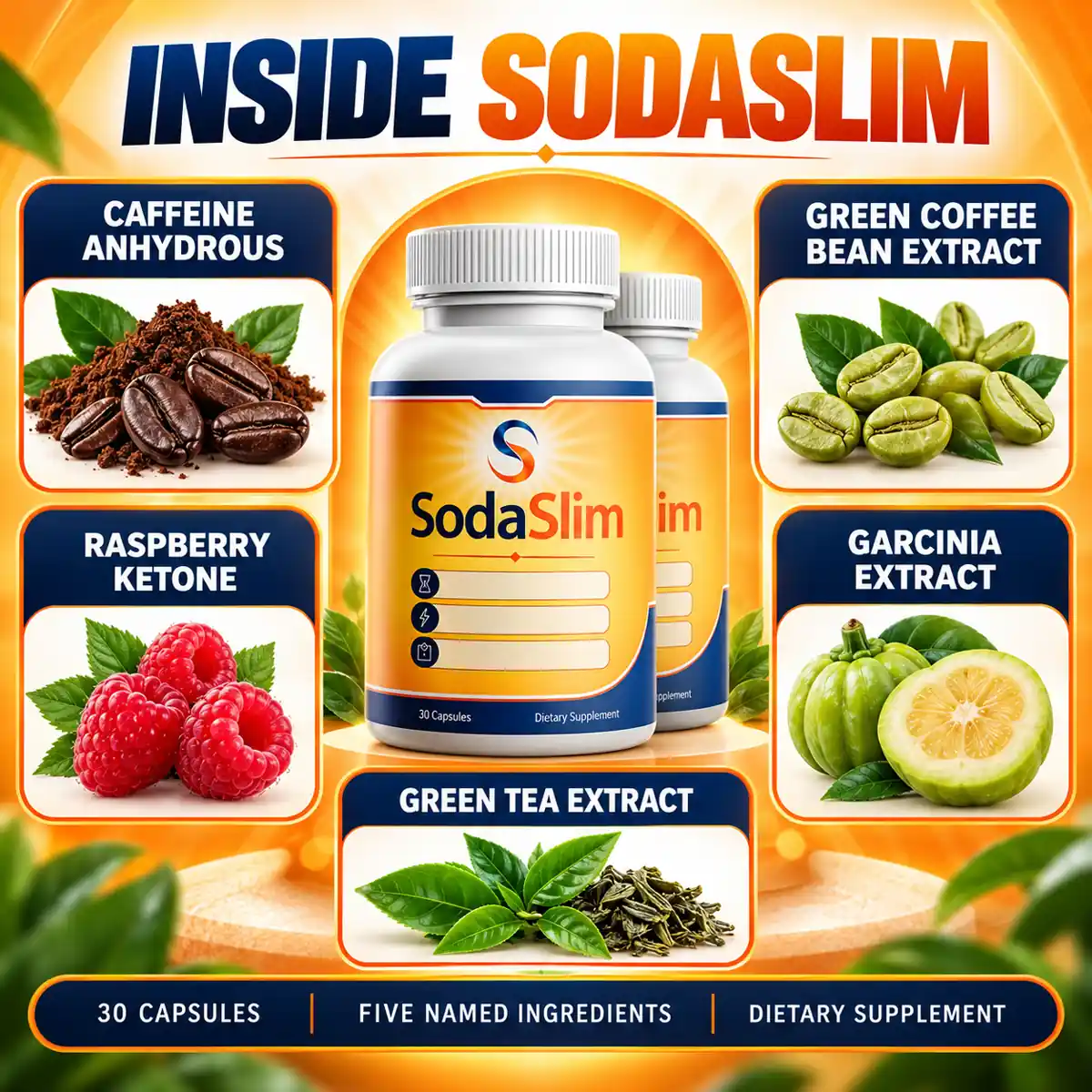
Garcinia cambogia and green tea extract turn up together on a great many labels, because one is sold for appetite and the other for fat oxidation and the two stories fit neatly on a front panel. SodaSlim contains both.
They also turn up together in a published case series about liver injury, and that is a less comfortable reason for a retailer to write about them. This post exists because a reader deciding whether to take a formula containing both is entitled to know what the literature says before they start, rather than after something happens.
Nothing here is a prediction about any individual. It is an account of what has been published, how rare it is, and which symptoms mean stopping rather than waiting.
What the case series found
The Drug-Induced Liver Injury Network, a US network that collects and adjudicates cases of liver injury from drugs and supplements, published a series in Clinical Gastroenterology and Hepatology covering garcinia cambogia products taken alone and in combination with green tea.
The patients were between 17 and 54 years old. Liver injury appeared between 13 and 223 days after starting, with a median of 51 days. Ninety-one per cent were hospitalised. One patient required a liver transplant and one died. The injury pattern was hepatocellular with jaundice, and peak aminotransferase values were significantly higher in the garcinia group than in the comparison groups.
The series also reported that a particular HLA-B allele was significantly more common in these patients than in those with injury from other herbal and dietary supplements or from conventional drugs, which suggests a genetic susceptibility rather than a dose-dependent toxicity in everybody.
Separately, a 2024 case report in the International Journal of Surgical Pathology describes cholestatic giant cell hepatitis resulting in fulminant liver failure after garcinia cambogia use.
How rare this is, honestly
A case series is not an incidence rate, and reading one as though it were is the commonest error in this kind of discussion.
What a case series tells you is that something happens and what it looks like when it does. What it cannot tell you is how often, because the denominator, the number of people who took the product and were fine, is not in the study.
The denominator here is very large. Garcinia products are sold in enormous volume and the published cases number in the dozens. At the level of the whole supplement category, the CDC's emergency-department surveillance estimated 23,005 US emergency visits a year attributable to dietary supplements out of a population taking billions of doses, with weight-loss products the largest single group among single-supplement cases.
So: rare. Rare is not the same as irrelevant, particularly when the outcome at the severe end is a transplant.
The green tea side of it
A systematic review of green tea and green tea extract safety, covering toxicological studies and adverse event data from 159 human intervention studies, identified the liver as the target organ and hepatotoxicity as the critical effect.
The important nuance is about form and dosing conditions. The review found hepatic adverse events strongly associated with large bolus doses taken as a solid, particularly while fasting, and positively correlated with total catechin and EGCG content. Brewed tea, and extracts taken in beverages or as part of food, did not show the same pattern.
From that data the authors derived a safe intake level of 338 mg of EGCG a day for adults taking it as a solid bolus dose, and suggested an observed safe level of 704 mg a day for beverage forms.
A capsule is a solid bolus dose. A capsule that prints no EGCG figure cannot be checked against 338 mg, which is the same structural problem this website describes for the caffeine row and with the same answer: the bottle you receive is the authority, and if it carries a panel, read it.
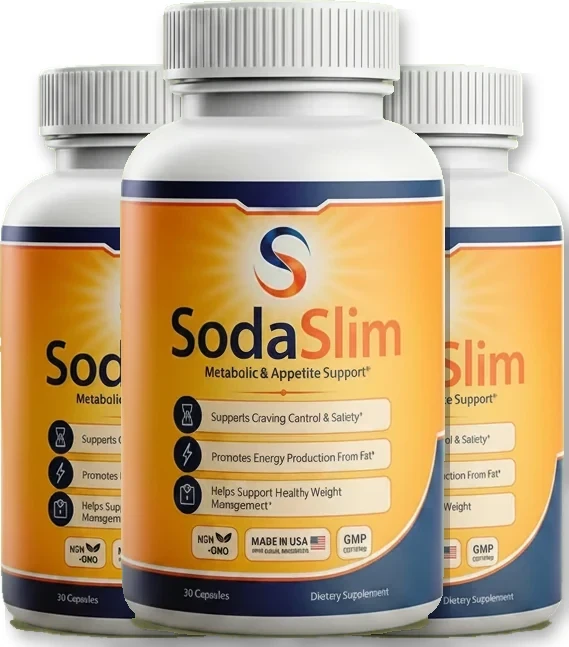
SodaSlim contains both garcinia and green tea extract
The side effects page sets out the symptoms worth acting on. Sixty days from sixty days from the day you pay to think better of it.
$158 for two bottles, $294 for six, and 60 days from the date you buy
Order SodaSlim On The Official WebsiteLot SOD-26/SO-5737 · 30 capsules · taken once each morning
The symptoms worth acting on
This is the practical content of the whole post, and it is short.
- New abdominal pain, particularly under the right ribs.
- Unusual tiredness that does not have another explanation.
- Loss of appetite or nausea that persists.
- Dark urine or pale stools.
- Any yellowing of the eyes or the skin.
Any of those means stop the capsule and be seen promptly. Say what you have been taking, for how long, and bring the bottle. The median time to onset in the case series was 51 days, which is well inside a three-bottle pack and well inside a sixty-day guarantee window.
It is also worth knowing the reverse: none of those symptoms is common, and having none of them after two bottles is the ordinary outcome. This list is there so that a rare event is recognised quickly, not so that a normal week is spent worrying.
Who should not take a formula with both
- Anyone with existing liver disease, of any kind.
- Anyone taking a medicine known to be hard on the liver. The prescriber will know which theirs is.
- Anyone who has ever had a liver blood test come back abnormal and queried.
- Anyone who drinks heavily.
- Anyone already taking a separate garcinia or green tea extract product. Two unlabelled sources of the same ingredient is the arrangement with the least to recommend it.
If any of those five describes you, the useful sentence for a clinician is that the capsule contains garcinia cambogia and green tea extract and the label prints no amount for either. That is more informative than the brand name and more honest than a five-item ingredient list.
And what the pairing is supposed to buy you
Worth setting the risk beside the benefit, because a rare risk is only worth taking for something.
Garcinia's mechanism is inhibition of ATP-citrate lyase, an enzyme on the route from citrate to new fat. The JAMA trial gave 1,500 mg of hydroxycitric acid a day for twelve weeks alongside a controlled diet and found no difference from placebo in body weight or fat mass. A meta-analysis of nine trials found a pooled difference of 0.88 kg, with its own authors calling the magnitude small and the clinical relevance uncertain, and noting gastrointestinal adverse events twice as common as placebo in one included study. A safety and efficacy review adds that most human studies were small, short and never ran past twelve weeks.
So the balance is a rare but serious liver signal against a pooled effect of under a kilogram whose clinical relevance the reviewers themselves doubt. That is not a reason to panic about a capsule, and it is a reason to know the symptoms.
Where this sits among supplement risks generally
A reader who has got this far deserves the proportion as well as the detail.
Liver injury from herbal and dietary supplements is a real and growing share of drug-induced liver injury reported to specialist networks, and weight-loss and bodybuilding products are over-represented within it. Against that, the number of people taking these products is measured in tens of millions and the reported cases are measured in dozens to hundreds.
The practical upshot is that this is a risk to recognise rather than a risk to avoid by never buying a supplement. It is also an argument for a specific habit that costs nothing: take one new product at a time, for long enough to know how you get on with it, before adding a second. Stacked products make any signal impossible to attribute, and the case series makes clear that the time to onset can be weeks or months rather than days.
The verdict
If you have a liver reason to be careful, this is not the formula to take. There are metabolism capsules that contain neither ingredient, and that is a straightforward way around the question.
If you do not, the sensible position is to know the five symptoms, to avoid stacking a second garcinia or green tea product on top, and to treat a new abdominal pain as a reason to stop rather than a reason to wait. The median time to onset in the published series was around seven weeks, so this is not a week-one concern and it is not an unlimited one either.
This desk sells a capsule containing both ingredients and has just spent sixteen hundred words explaining the case series about them. That is the standard the rest of this website asks to be judged by.
Sources
- Vuppalanchi R, Bonkovsky HL, Ahmad J, et al. Garcinia cambogia, either alone or in combination with green tea, causes moderate to severe liver injury. Clin Gastroenterol Hepatol. 2022;20(6):e1416-e1425. PMID 34400337. https://pubmed.ncbi.nlm.nih.gov/34400337/
- Flerova E, Ambilil M, Civan JM. Striking cholestatic giant cell hepatitis resulting in fulminant liver failure after Garcinia cambogia use. Int J Surg Pathol. 2024;32(3):619-624. PMID 37461217. https://pubmed.ncbi.nlm.nih.gov/37461217/
- Hu J, Webster D, Cao J, Shao A. The safety of green tea and green tea extract consumption in adults - results of a systematic review. Regul Toxicol Pharmacol. 2018;95:412-433. PMID 29580974. https://pubmed.ncbi.nlm.nih.gov/29580974/
- Heymsfield SB, Allison DB, Vasselli JR, Pietrobelli A, Greenfield D, Nunez C. Garcinia cambogia (hydroxycitric acid) as a potential antiobesity agent: a randomized controlled trial. JAMA. 1998;280(18):1596-600. PMID 9820262. https://pubmed.ncbi.nlm.nih.gov/9820262/
- Onakpoya I, Hung SK, Perry R, Wider B, Ernst E. The use of Garcinia extract (hydroxycitric acid) as a weight loss supplement: a systematic review and meta-analysis of randomised clinical trials. J Obes. 2011;2011:509038. PMID 21197150. https://pubmed.ncbi.nlm.nih.gov/21197150/
- Marquez F, Babio N, Bullo M, Salas-Salvado J. Evaluation of the safety and efficacy of hydroxycitric acid or Garcinia cambogia extracts in humans. Crit Rev Food Sci Nutr. 2012;52(7):585-94. PMID 22530711. https://pubmed.ncbi.nlm.nih.gov/22530711/
- Geller AI, Shehab N, Weidle NJ, et al. Emergency department visits for adverse events related to dietary supplements. N Engl J Med. 2015;373(16):1531-40. PMID 26465986. https://pubmed.ncbi.nlm.nih.gov/26465986/